

There’s a question you’ve probably asked yourself , maybe in the shower, maybe at 2am staring at the ceiling, maybe in a moment so quiet you could hear your own heartbeat. It’s not “what should I do with my life?” or “am I happy?” , though it wears those costumes sometimes.
The question is simpler. And worse.
Who is the one asking?
You can Google anything. You can Google “how to find yourself” and get 2.3 billion results in 0.4 seconds. You can take personality tests, read horoscopes, do attachment style quizzes, map your Enneagram, and still walk away feeling like someone handed you a beautifully framed photograph , of someone else.
Because here’s the thing nobody tells you: self-discovery isn’t a search engine problem. It’s a sensing problem.
Let me explain what I mean.
The Search Engine Problem
Imagine a television screen. A gorgeous 4K OLED display. Now imagine this TV becomes so sophisticated that it starts believing it’s producing the movies it displays. It thinks the drama, the love stories, the plot twists , all of it is coming from inside itself.

That’s roughly what’s happening with your conscious mind.
Neuroscience has been quietly uncovering something both humbling and liberating: by the time you become aware of a decision, your brain has already made it. Not by milliseconds , by measurable, observable, “the-horse-has-left-the-barn” amounts of time.
Your conscious experience is a beautifully rendered display of processes that have already completed somewhere deeper.
You are , and I say this with genuine awe, not dismissal , watching a movie of yourself, in real time, and calling it “me.”
This isn’t some fringe theory. Benjamin Libet’s experiments showed it decades ago, and the findings have only gotten more robust since. So when you Google “how to know yourself,” you’re essentially asking the TV screen to explain the signal.
The Wisdom of the Body
Have you ever walked into a room and felt off , before you could explain why? Met someone and felt instantly warm or instantly guarded, with no rational justification? Had a gut feeling that turned out to be eerily accurate?
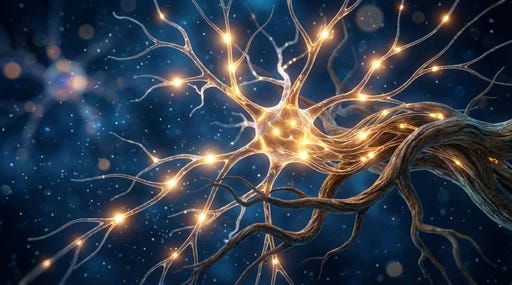
That wasn’t mystical intuition. That was your body doing what it’s been doing since before you had language: reading the environment and sending you a report.
Your emotions aren’t decorations on top of rational thought. They’re the other way around. They are your oldest, most sophisticated information system , millions of years of evolutionary engineering designed to keep you alive and connected.
Your heart rate shifts. Your skin conductance changes. Neurochemical cascades fire. And then , sometimes seconds later, sometimes never , your conscious mind gets the memo and tries to make a story out of it.
We’ve all experienced this: the feeling that arrives before the explanation. The tears that come before you know why you’re crying. The inexplicable ease with certain people and the inexplicable tension with others. What if those feelings aren’t noise? What if they’re signal?
The Relational Self
Most of our self-discovery attempts assume there’s a fixed “you” hiding somewhere inside, waiting to be found. Like an archaeological dig: brush away enough dust, and there’s the artifact.
But what if the self isn’t an artifact? What if it’s more like a conversation?
Think about how different you are with your mother versus your best friend. With your boss versus your child. With a stranger on a train. You’re not faking any of these versions , each one is genuinely you. But which one is the you?
The question itself might be the trap. There’s a Hasidic teaching from the Kotzker Rebbe that has stuck with me like a splinter: “If I am I because I am I, and you are you because you are you , then I am I and you are you. But if I am I because you are you, and you are you because I am I , then I am not I and you are not you.”
Sit with that for a second. It’s pointing at something we all feel but rarely name: there’s a you that exists before and beneath all the relational versions. Not an identity. Not a personality type. Something more like... the one who notices. The one who senses.
And thousands of miles from 19th-century Poland, in Southern Africa, the Ubuntu philosophy says something that sounds like the opposite but might be the same thing from a different angle: “I am because we are.”
What Dreams Reveal About Reality
I want to share something that genuinely shifted my thinking. You know how flying in dreams feels real? Not like imagining flight , like experiencing it. The wind, the weightlessness, the visceral thrill of it.

Here’s a possibility: when you fall into deep sleep, your sensory system shuts down. Someone could pinch you and you wouldn’t feel it. Speak to you and you wouldn’t hear. Your consciousness hasn’t disappeared , but it’s been disconnected from its usual incoming signals.
Now , what happens when your brain’s gravity sensor goes quiet? Your body still obeys gravity, lying there on the mattress. But the experience of weight, of being pulled downward , that signal has gone dark.
In that absence, consciousness does what it always does: it renders the available information. No gravity signal? You’re weightless. You’re flying.
I find this beautiful because of what it implies: consciousness isn’t creating your experience from scratch. It’s rendering whatever signals reach it. It’s a display , and the quality of the display depends entirely on what information is flowing in. Which means self-discovery isn’t about thinking harder. It’s about sensing more clearly.
The Question Behind the Question
So here’s where I’ll leave you , not with an answer, because that would defeat the point.
If your conscious mind is a display, not a director. If your body has been reading the world accurately all along. If who you are shifts depending on who you’re with , not because you’re fake, but because identity is relational by nature.
And if consciousness renders whatever signals it receives, like a dream that feels real because the information is real to the system processing it... Then maybe the question isn’t “Who am I?”
Maybe it’s: “What am I sensing that I haven’t let myself notice yet?”
That question won’t return 2.3 billion results. It won’t give you a personality type or a label. But it might do something far more interesting. It might let the body finally finish its sentence.
The question you can’t Google might be the one your body already answered , before you thought to ask.
And look , I’m not here to tell you that everything you believe about yourself is wrong. Your experience is your experience, and it’s legitimate.
All I’m offering is a possibility: that the deepest kind of self-knowledge might not come from thinking about who you are, but from listening to what your body has been trying to tell you all along.
References
Damasio, A. (1994). *Descartes' Error: Emotion, Reason, and the Human Brain*. New York: Putnam Publishing.
Dennett, D. C. (1991). *Consciousness Explained*. Boston: Little, Brown and Company.
Gazzaniga, M. S. (2011). *Who's In Charge?: Free Will and the Science of the Brain*. New York: Ecco Press.
Seth, A. (2021). *Being You: A New Science of Consciousness*. New York: Dutton.
Tutu, D. (1999). *No Future Without Forgiveness*. New York: Doubleday.